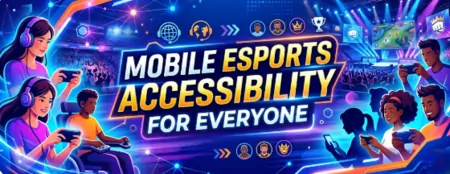
Mobile Esports Accessibility for Everyone: Expanding Competitive Gaming Opportunities
Mobile esports has rapidly evolved from casual mobile gaming into a global competitive phenomenon.
With smartphones becoming more powerful and internet connectivity improving worldwide, millions of players can now participate in esports competitions directly from their mobile devices.
This transformation has made competitive gaming more inclusive than ever before, giving rise to the idea of mobile esports accessibility for everyone.
Unlike traditional esports that often require expensive gaming computers, consoles, and specialized equipment, mobile esports can be played using devices that many people already own.
This accessibility allows players from different backgrounds, locations, and financial situations to join the competitive gaming community.
As mobile gaming technology continues to advance, the esports industry is becoming increasingly open to players of all skill levels, creating opportunities for both entertainment and professional growth.
Table of Contents
What is Mobile Esports?
Mobile esports refers to organized competitive gaming played on smartphones or tablets, often involving multiplayer games where players compete individually or in teams.
These competitions can range from:
- Casual community tournaments
- Online ranked matches
- Regional esports competitions
- International championships
Players can participate from home, gaming cafes, or esports arenas depending on the event.
Why Mobile Esports is More Accessible Than Traditional Esports
Mobile esports removes several barriers that previously limited participation in competitive gaming.
Affordable Entry Point
Most people already own smartphones, eliminating the need for expensive gaming equipment.
Easy Setup
Mobile games can be downloaded quickly without requiring complex installation or hardware configuration.
Flexible Play Environment
Players can compete from virtually anywhere with a stable internet connection.
Shorter Learning Curve
Many mobile esports titles are designed to be easy to learn while still offering competitive depth.
These factors help make competitive gaming more inclusive.
Key Factors That Improve Mobile Esports Accessibility for Everyone
Several technological and community developments contribute to making mobile esports accessible for everyone.
1. Improved Smartphone Technology
Modern smartphones now feature:
- High refresh rate displays
- Powerful processors
- Enhanced graphics performance
- Long battery life
These advancements allow mobile devices to handle competitive gameplay smoothly.
2. Global Internet Expansion
Faster internet connections and wider mobile network coverage allow more players to participate in online tournaments.
Stable connectivity is essential for real-time competitive gameplay.
3. Free-to-Play Game Models
Many popular mobile esports games are free to download, allowing players to participate without upfront costs.
Players can practice and compete without needing to purchase the game.
4. Community Tournaments
Online communities regularly organize local or regional competitions, providing opportunities for players to develop their skills.
These grassroots tournaments help new players enter the competitive scene.
For additional information read the rise of mobile esports
Popular Genres in Mobile Esports Accessibility for Everyone
Mobile esports covers several competitive game genres.
Multiplayer Online Battle Arena (MOBA)
Team-based strategy games where players control unique characters with specialized abilities.
Battle Royale
Large-scale survival competitions where players compete to be the last player or team remaining.
Tactical Shooters
Strategy-driven shooting games that require teamwork, precision, and communication.
Strategy Games
Games that focus on planning, resource management, and tactical decision-making.
These genres attract diverse player communities.
Benefits of Mobile Esports Accessibility for Everyone
The expansion of mobile esports provides numerous advantages.
Inclusivity
Players from different economic backgrounds can compete using devices they already own.
Global Participation
Mobile esports tournaments attract players from many regions, expanding the competitive ecosystem.
Skill Development
Competitive gaming encourages strategic thinking, teamwork, and quick decision-making.
Career Opportunities
Professional players, content creators, commentators, and tournament organizers can build careers within the esports industry.
Challenges Facing Mobile Esports Accessibility for Everyone
Despite its accessibility, some challenges still exist.
Device Performance Differences
Not all smartphones provide the same performance, which may affect competitive balance.
Internet Connectivity Issues
Unstable internet connections can disrupt gameplay during competitions.
Competitive Infrastructure
Some regions still lack organized esports tournaments or training communities.
Addressing these challenges will help further expand accessibility.
How Players Can Start in Mobile Esports
Players interested in mobile esports can begin by following simple steps.
Choose a Competitive Game
Select a game with an active competitive community.
Practice Regularly
Developing skills through consistent practice improves gameplay performance.
Join Online Communities
Communities provide information about tournaments and team recruitment.
Participate in Small Tournaments
Starting with local or amateur competitions helps build experience.
The Future of Mobile Esports
The future of mobile esports looks promising as technology continues evolving.
Upcoming developments may include:
- Cross-platform competitions
- Enhanced streaming integration
- AI-powered coaching tools
- Larger international tournaments
As the industry grows, mobile esports will likely become an even more significant part of global competitive gaming.
Conclusion on Mobile Esports Accessibility for Everyone
Mobile esports accessibility is transforming competitive gaming by allowing more people to participate regardless of location or financial resources.
With smartphones serving as powerful gaming platforms, players can compete, improve their skills, and join global esports communities.
As technology and infrastructure continue advancing, mobile esports will become an increasingly inclusive and dynamic space for gamers everywhere.
Frequently Asked Questions About Mobile Esports Accessibility for Everyone
1. What makes mobile esports more accessible than traditional esports?
Mobile esports requires only a smartphone and internet connection, eliminating the need for expensive gaming computers or consoles.
2. Do players need powerful phones to compete?
While high-performance phones can improve gameplay, many competitive mobile games are optimized for mid-range devices.
3. Are mobile esports tournaments available for beginners?
Yes, many community tournaments welcome new players and amateur teams.
4. Can mobile esports become a professional career?
Yes, some players become professional competitors, streamers, coaches, or esports commentators.
5. Do mobile esports games require payment?
Many competitive mobile games are free-to-play, allowing players to participate without purchasing the game.
6. How can players find mobile esports tournaments?
Players can discover tournaments through gaming communities, social media groups, or official esports event announcements.
7. Are mobile esports games skill-based?
Yes, competitive gameplay relies heavily on strategy, teamwork, and player skill.
8. What internet speed is needed for mobile esports?
Stable internet connections with low latency are essential for smooth competitive gameplay.
9. Are mobile esports competitions played internationally?
Yes, many tournaments include players from multiple countries.
10. What is the biggest advantage of mobile esports accessibility?
The biggest advantage is inclusivity, allowing players from diverse backgrounds to participate in competitive gaming.